Showing posts with label Ancient Buildings. Show all posts

The Next Format

The Rock Islands Southern Lagoon consists of numerous large and small forested limestone islands, scattered within a marine lagoon protected by a barrier reef. The property lies within Koror State, immediately to the south of Palau's main volcanic island Babeldaob in the western Pacific Ocean. The living paradise Palau rock islands inscribed as world heritage this year. Rock Islands Southern Lagoon covers 100,200 ha and includes 445 uninhabited limestone islands of volcanic origin. Many of them display unique mushroom-like shapes in turquoise lagoons surrounded by coral reefs.
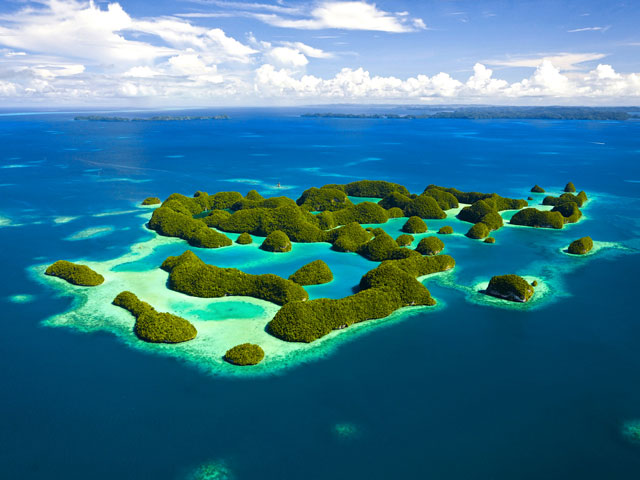
Palau Southern Lagoon Islands

This is for side heading

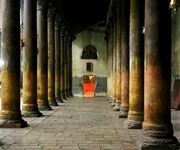
Nativity ChurchFortifications on the Caribbean Side of Panama is a magnificent examples of 17th- and 18th-century military architecture, these Panamanian forts on the Caribbean coast form part of the defense system built by the Spanish Crown to protect transatlantic trade. The group of 17th- and 18th-century fortifications, the historic sites of Portobelo and San Lorenzo, are outstanding examples of Spanish colonial military architecture of this period. These fortifications, imbued with history, are a magnificent example of Spanish military architecture, located in a natural setting of great beauty.
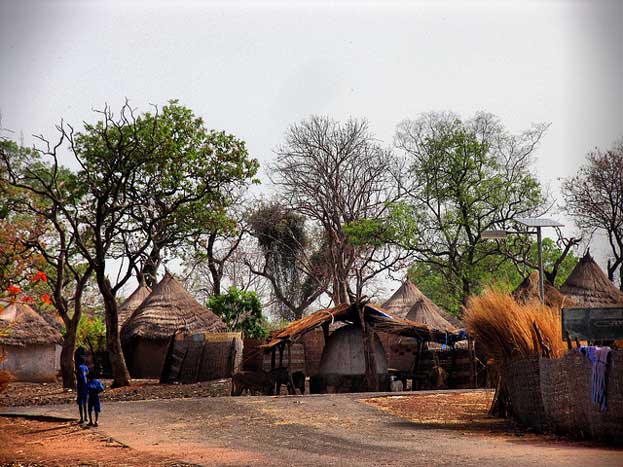
Niokolo Koba National Park Senegal
Niokolo Koba National Park Entrance Village
You have read this article Ancient Buildings / Australia / Bolivia / Cambodia / Castles / Churches / Deserts / Egypt with the title Ancient Buildings. You can bookmark this page URL https://tiffanyeatworld.blogspot.com/2012/08/the-next-format.html. Thanks!
Temporarily Positing

The Great Wall of China is a series of stone and earthen fortifications in northern China, built originally to protect the northern borders of the Chinese Empire against intrusions by various nomadic groups. Several walls havebeen built since the 5th century BC that are referred to collectively as the Great Wall, which has been rebuilt and maintained from the 5th century BC through the 16th century. One of the most famous is the wall built between 220–206 BC by the first Emperor of China, Qin Shi Huang. Little of that wall remains; the majority of the existing wall was built during the Ming Dynasty. The Great Wall stretches from Shanhaiguan in the east, to Lop Nur in the west, along an arc that roughly delineates the southern edge of Inner Mongolia. The most comprehensive archaeological survey, using advanced technologies, has concluded that the entire Great Wall, with all of its branches, stretches for 8,851.8 km (5,500.3 mi).
image
Great Wall Of China

Go to the railway station and get down at Agra.


The Great Wall of China is a series of stone and earthen fortifications in northern China, built originally to protect the northern borders of the Chinese Empire against intrusions by various nomadic groups.
Go to the railway station and get down at Agra.
Little of that wall remains; the majority of the existing wall was built during the Ming Dynasty. The Great Wall stretches from Shanhaiguan in the east, to Lop Nur in the west, along an arc that roughly delineates the southern edge of Inner Mongolia.
Go to the railway station and get down at Agra.
Little of that wall remains; the majority of the existing wall was built during the Ming Dynasty. The Great Wall stretches from Shanhaiguan in the east, to Lop Nur in the west, along an arc that roughly delineates the southern edge of Inner Mongolia.
Singapore Skyline City
Singapore City

Go to the railway station and get down at Agra.


The Great Wall of China is a series of stone and earthen fortifications in northern China, built originally to protect the northern borders of the Chinese Empire against intrusions by various nomadic groups.
Go to the railway station and get down at Agra.
Little of that wall remains; the majority of the existing wall was built during the Ming Dynasty. The Great Wall stretches from Shanhaiguan in the east, to Lop Nur in the west, along an arc that roughly delineates the southern edge of Inner Mongolia.
Go to the railway station and get down at Agra.
The Great Wall of China is a series of stone and earthen fortifications in northern China, built originally to protect the northern borders of the Chinese Empire against intrusions by various nomadic groups.

Go to the railway station and get down at Agra.

Several walls havebeen built since the 5th century BC that are referred to collectively as the Great Wall, which has been rebuilt and maintained from the 5th century BC through the 16th century.
The Great Wall of China is a series of stone
The Great Wall stretches from Shanhaiguan in the east, to Lop Nur in the west, along an arc that roughly delineates the southern edge of Inner Mongolia.
image
Singapore skyline, dusk

Go to the railway station and get down at Agra.


The Great Wall of China is a series of stone and earthen fortifications in northern China, built originally to protect the northern borders of the Chinese Empire against intrusions by various nomadic groups.
The Great Wall of China is a series of stone
The most comprehensive archaeological survey, using advanced technologies, has concluded that the entire Great Wall, with all of its branches, stretches for 8,851.8 km (5,500.3 mi).
Go to the railway station and get down at Agra.
The most comprehensive archaeological survey, using advanced technologies, has concluded that the entire Great Wall, with all of its branches, stretches for 8,851.8 km (5,500.3 mi).

Go to the railway station and get down at Agra.

The Great Wall stretches from Shanhaiguan in the east, to Lop Nur in the west, along an arc that roughly delineates the southern edge of Inner Mongolia.
The Great Wall of China is a series of stone
The Great Wall stretches from Shanhaiguan in the east, to Lop Nur in the west, along an arc that roughly delineates the southern edge of Inner Mongolia.
image
Singapore skyline, dusk
N
Find Out Who is Fitted for the Unknown Image? (Use The Five Clues)
Who Am I?
The character must be within 60.
Probably You Know the Answer but not, you can get the Answer Below
The Previous Answer is : Nepoleon. The above Who Am I is here.
Quotation of the Article
Impossible is word only to be found in the dictionary of fools.
Nepoleon
You have read this article Afghanistan / Africa / Africa Heritage / Algeria / Ancient Buildings / Australia / Colombia with the title Ancient Buildings. You can bookmark this page URL https://tiffanyeatworld.blogspot.com/2012/05/temporarily-positing.html. Thanks!

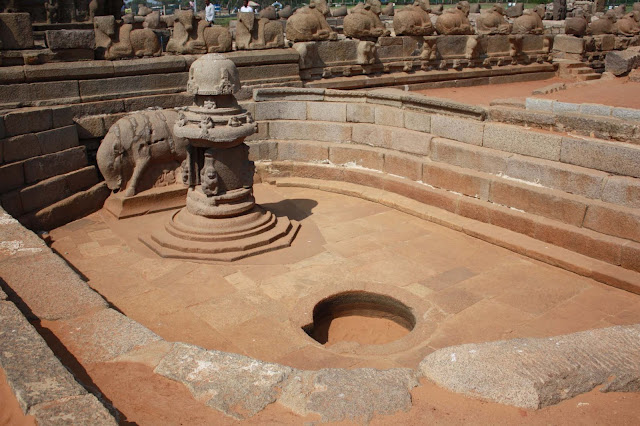
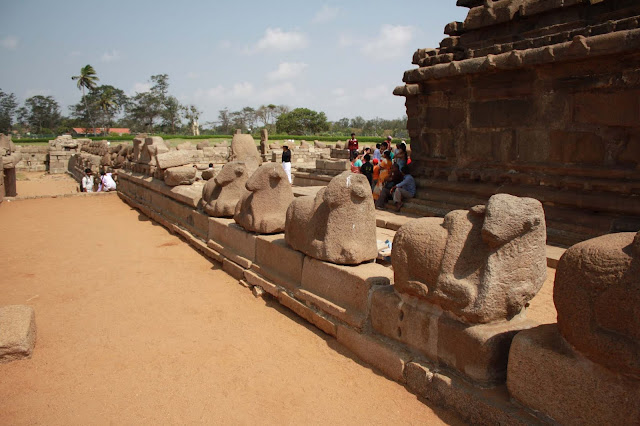
Mahabalipuram India

This group of sanctuaries, founded by the Pallava kings, was carved out of rock along the Coromandel coast in the 7th and 8th centuries. It is known especially for its rathas (temples in the form of chariots), mandapas (cave sanctuaries), giant open-air reliefs such as the famous 'Descent of the Ganges', and the temple of Rivage, with thousands of sculptures to the glory of Shiva.

image
Mahabalipuram India

Mahabalipuram is pre-eminently testimony to the Pallavas civilization of south-east India.The sanctuary, known especially for its rathas (temples in the form of chariots), mandapas (cave sanctuaries), and giant open-air reliefs, is one of the major centres of the cult of Siva. The influence of the sculptures of Mahabalipuram, characterized by the softness and supple mass of their modelling, spread widely (Cambodia, Annam, Java).

image

Founded in the 7th century by the Pallavas sovereigns south of Madras, the harbour of Mahabalipuram traded with the distant kingdoms of South-East Asia: Kambuja (Cambodia) and Shrivijaya (Malaysia, Sumatra, Java) and with the empire of Champa (Annam). But the fame of its role as a harbour has been transferred to its rock sanctuaries and Brahmin temples which were constructed or decorated at Mahabalipuram between 630 and 728.

image

Most of the monuments, like the rock-cut rathas, sculptured scenes on open rocks like Arjuna's penance, the caves of Govardhanadhari and Ahishasuramardini, and the Jala-Sayana Perumal temple (the sleeping Mahavishnu or Chakrin at the rear part of the Shore temple complex) are attributed to the period of Narasimhavarman I Mamalla.

image

The monuments may be subdivided into five categories:
  • ratha temples in the form of processional chariots, monolithic constructions cut into the residual blocks of diorite which emerge from the sand. The five ratha of the south, which are the most famous, date to the reign of Naharasimhavarman Mamalla (630-68), the great Pallavas king (the Cholas texts, moreover, call the city Mamallapuram).
  • mandapa, or rock sanctuaries modelled as rooms covered with bas-reliefs (the mandapa of Varaha, representing the acts of this avatar of Vishnu; the mandapa of the Five Pandavas and, especially, the mandapa of Krishna and the mandapa of Mahishasuramardini).
  • rock reliefs in the open air illustrate a popular episode in the iconography of Siva, that of the Descent of the Ganges. The wise King Baghirata having begged him to do so, Siva ordered the Ganges to descend to Earth and to nourish the world. The sculptors used the natural fissure dividing the cliff to suggest this cosmic event to which a swarming crowd of gods, goddesses, mythical beings (Kinnara, Gandherya, Apsara, Gana, Naga and Nagini), wild and domestic animals bear witness.
  • temples built from cut stone, like the Temple of Rivage, which was constructed under King Rajasimha Narasimavarmn II (695-722), with its high-stepped pyramidal tower and thousands of sculptures dedicated to the glory of Siva.
  • monolithic rathas, from single- to triple-storeyed, display a variety of architectural forms, while the Dharmaraja, Arjuna and Draupadi rathas are square in plan, the Bhima and Ganesa rathas rectangular, and the Sahadeva ratha apsidal. Structural architecture was introduced on a grand scale by Pallava Rajasimha (700-28), culminating in the erection of the Shore Temple.


image

Another piece of architectural beauty is the Shore temple, standing against the background of the deep blue waters of the ocean. It belongs to a period when the constructional style of the Pallavas was at its peak in its decorative beauty and intrinsic quality. This building has become eroded by the corrosive action of seawater and air and the sculptures have become indistinct.

image

image

image

image

image

image

image

image

image

image

image

image

image

image

image

Text source:- Wikipedia. Images are copyrighted by their owners. Found any copyright issue, contact the administrator immediately. Report it now!
You have read this article Ancient Buildings / Asia / Asia Heritage / Heritage / Heritage Cultural / Heritage India / India / Monuments / Temples with the title Ancient Buildings. You can bookmark this page URL https://tiffanyeatworld.blogspot.com/2012/03/mahabalipuram-india.html. Thanks!

Tulum Mexico

Tulum is the site of a Pre-Columbian Maya walled city serving as a major port for Coba. The ruins are situated on feet tall cliffs, along the east coast of the Yucatán Peninsula on the Caribbean Sea in the state of Quintana Roo, Mexico. Tulum was one of the last cities inhabited and built by the Mayans; it was at its height between the 13th and 15th centuries and managed to survive about 70 years after the Spanish began occupying Mexico. Old World diseases brought by the Spanish settlers appear to have been the cause of its demise. One of the best-preserved coastal Maya sites, Tulum is today a popular site for tourists.

image
Tulum Mexico

image

image

image

image

image

image

image

image

image

image

image

image

image

Text source:- Wikipedia. Images are copyrighted by Atbattson, Ron Lewis, Michael Sweet, Vampire Black Cat, Dtraveller and Asheai. Found any copyright issue, contact the administrator immediately. Report it now!
You have read this article Ancient Buildings / Mexico / Monuments / North America with the title Ancient Buildings. You can bookmark this page URL https://tiffanyeatworld.blogspot.com/2012/03/tulum-mexico.html. Thanks!

Belfry Bruges

The belfry of Bruges, or Belfort, is a medieval bell tower in the historical centre of Bruges, Belgium. One of the city's most prominent symbols, the belfry formerly housed a treasury and the municipal archives, and served as an observation post for spotting fires and other danger. A narrow, steep staircase of 366 steps, accessible by the public for an entry fee, leads to the top of the 83-metre-high building, which leans about a metre to the east. To the sides and back of the tower stands the former market hall, a rectangular building only 44 m broad but 84 m deep, with an inner courtyard. The belfry, accordingly, is also known as the Halletoren (tower of the halls).

image
Belfry Bruges

image

image

image

image

image

image

image

image

image

Text source:- Wikipedia. Images are copyrighted by their owners. Found any copyright issue, contact the administrator immediately. Report it now!
You have read this article Ancient Buildings / Belgium / Europe / Monuments / Tower with the title Ancient Buildings. You can bookmark this page URL https://tiffanyeatworld.blogspot.com/2012/02/belfry-bruges.html. Thanks!