Showing posts with label Australia. Show all posts

The Next Format

The Rock Islands Southern Lagoon consists of numerous large and small forested limestone islands, scattered within a marine lagoon protected by a barrier reef. The property lies within Koror State, immediately to the south of Palau's main volcanic island Babeldaob in the western Pacific Ocean. The living paradise Palau rock islands inscribed as world heritage this year. Rock Islands Southern Lagoon covers 100,200 ha and includes 445 uninhabited limestone islands of volcanic origin. Many of them display unique mushroom-like shapes in turquoise lagoons surrounded by coral reefs.
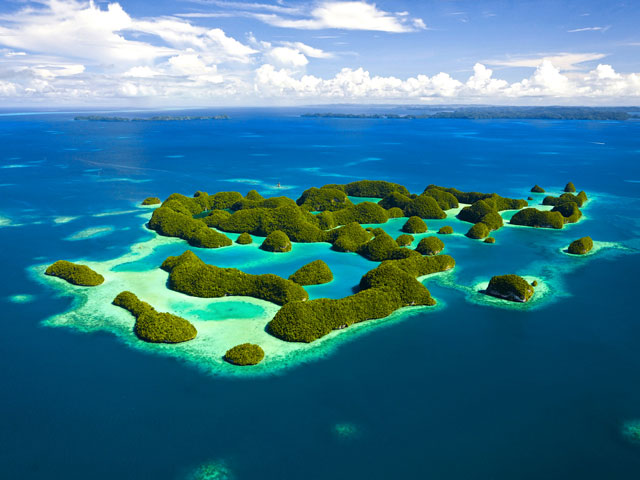
Palau Southern Lagoon Islands

This is for side heading

Nativity ChurchFortifications on the Caribbean Side of Panama is a magnificent examples of 17th- and 18th-century military architecture, these Panamanian forts on the Caribbean coast form part of the defense system built by the Spanish Crown to protect transatlantic trade. The group of 17th- and 18th-century fortifications, the historic sites of Portobelo and San Lorenzo, are outstanding examples of Spanish colonial military architecture of this period. These fortifications, imbued with history, are a magnificent example of Spanish military architecture, located in a natural setting of great beauty.
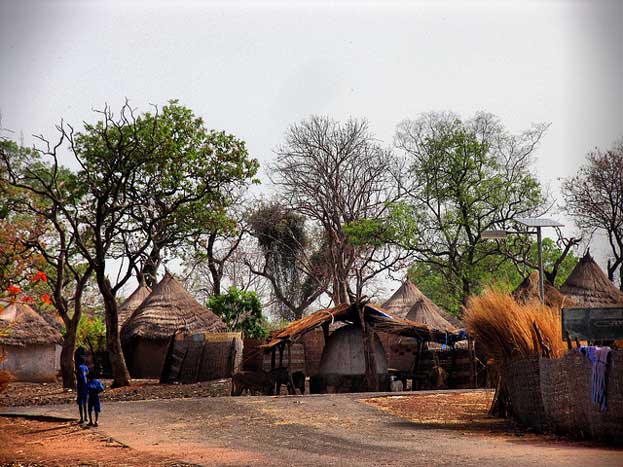
Niokolo Koba National Park Senegal
Niokolo Koba National Park Entrance Village
You have read this article Ancient Buildings / Australia / Bolivia / Cambodia / Castles / Churches / Deserts / Egypt with the title Australia. You can bookmark this page URL https://tiffanyeatworld.blogspot.com/2012/08/the-next-format.html. Thanks!
Temporarily Positing

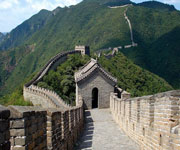
The Great Wall of China is a series of stone and earthen fortifications in northern China, built originally to protect the northern borders of the Chinese Empire against intrusions by various nomadic groups. Several walls havebeen built since the 5th century BC that are referred to collectively as the Great Wall, which has been rebuilt and maintained from the 5th century BC through the 16th century. One of the most famous is the wall built between 220–206 BC by the first Emperor of China, Qin Shi Huang. Little of that wall remains; the majority of the existing wall was built during the Ming Dynasty. The Great Wall stretches from Shanhaiguan in the east, to Lop Nur in the west, along an arc that roughly delineates the southern edge of Inner Mongolia. The most comprehensive archaeological survey, using advanced technologies, has concluded that the entire Great Wall, with all of its branches, stretches for 8,851.8 km (5,500.3 mi).
image
Great Wall Of China

Go to the railway station and get down at Agra.


The Great Wall of China is a series of stone and earthen fortifications in northern China, built originally to protect the northern borders of the Chinese Empire against intrusions by various nomadic groups.
Go to the railway station and get down at Agra.
Little of that wall remains; the majority of the existing wall was built during the Ming Dynasty. The Great Wall stretches from Shanhaiguan in the east, to Lop Nur in the west, along an arc that roughly delineates the southern edge of Inner Mongolia.
Go to the railway station and get down at Agra.
Little of that wall remains; the majority of the existing wall was built during the Ming Dynasty. The Great Wall stretches from Shanhaiguan in the east, to Lop Nur in the west, along an arc that roughly delineates the southern edge of Inner Mongolia.
Singapore Skyline City
Singapore City

Go to the railway station and get down at Agra.


The Great Wall of China is a series of stone and earthen fortifications in northern China, built originally to protect the northern borders of the Chinese Empire against intrusions by various nomadic groups.
Go to the railway station and get down at Agra.
Little of that wall remains; the majority of the existing wall was built during the Ming Dynasty. The Great Wall stretches from Shanhaiguan in the east, to Lop Nur in the west, along an arc that roughly delineates the southern edge of Inner Mongolia.
Go to the railway station and get down at Agra.
The Great Wall of China is a series of stone and earthen fortifications in northern China, built originally to protect the northern borders of the Chinese Empire against intrusions by various nomadic groups.

Go to the railway station and get down at Agra.

Several walls havebeen built since the 5th century BC that are referred to collectively as the Great Wall, which has been rebuilt and maintained from the 5th century BC through the 16th century.
The Great Wall of China is a series of stone
The Great Wall stretches from Shanhaiguan in the east, to Lop Nur in the west, along an arc that roughly delineates the southern edge of Inner Mongolia.
image
Singapore skyline, dusk

Go to the railway station and get down at Agra.


The Great Wall of China is a series of stone and earthen fortifications in northern China, built originally to protect the northern borders of the Chinese Empire against intrusions by various nomadic groups.
The Great Wall of China is a series of stone
The most comprehensive archaeological survey, using advanced technologies, has concluded that the entire Great Wall, with all of its branches, stretches for 8,851.8 km (5,500.3 mi).
Go to the railway station and get down at Agra.
The most comprehensive archaeological survey, using advanced technologies, has concluded that the entire Great Wall, with all of its branches, stretches for 8,851.8 km (5,500.3 mi).

Go to the railway station and get down at Agra.

The Great Wall stretches from Shanhaiguan in the east, to Lop Nur in the west, along an arc that roughly delineates the southern edge of Inner Mongolia.
The Great Wall of China is a series of stone
The Great Wall stretches from Shanhaiguan in the east, to Lop Nur in the west, along an arc that roughly delineates the southern edge of Inner Mongolia.
image
Singapore skyline, dusk
N
Find Out Who is Fitted for the Unknown Image? (Use The Five Clues)
Who Am I?
The character must be within 60.
Probably You Know the Answer but not, you can get the Answer Below
The Previous Answer is : Nepoleon. The above Who Am I is here.
Quotation of the Article
Impossible is word only to be found in the dictionary of fools.
Nepoleon
You have read this article Afghanistan / Africa / Africa Heritage / Algeria / Ancient Buildings / Australia / Colombia with the title Australia. You can bookmark this page URL https://tiffanyeatworld.blogspot.com/2012/05/temporarily-positing.html. Thanks!

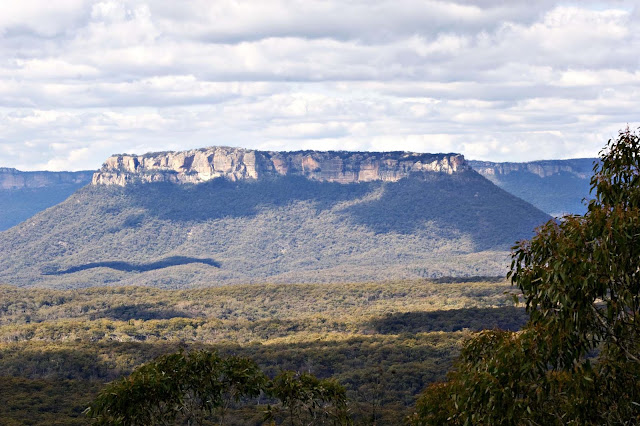
Capertee Valley

The Capertee Valley is a large valley in New South Wales, Australia, and (135 km (84 mi) north-west of Sydney. It is longer and about 1 kilometre (0.6 mi) wider than the Grand Canyon of Arizona. Despite this, and being only a two and a half hour drive from Australia's largest city, Sydney (135 km (84 mi) NW), the Capertee Valley is little known, in or outside of Australia, except by bird watchers.

image
Capertee Valley

The valley follows the Capertee River as it cuts through the Sydney Basin, a sedimentary basin consisting of Permian and Triassic sedimentary rock west of the Blue Mountains.The valley is classified by BirdLife International as an Important Bird Area because it is the most important breeding site for the endangered Regent Honeyeater. It also supports populations of the Painted Honeyeater, Rockwarbler, Swift Parrot and Diamond Firetail.

In the US published book Fifty Places to Go Birding before You Die, author Chris Santella lists Capertee Valley as one of only two locations in Australia selected in his top 50 world bird watching locations.

image

image

image

image

image

image

image

image

image

image

image

image

image

image

Text source:- Wikipedia. Images are copyrighted by their owners. Found any copyright issue, contact the administrator immediately. Report it now!
You have read this article Australia / Oceania / Valley with the title Australia. You can bookmark this page URL https://tiffanyeatworld.blogspot.com/2012/03/capertee-valley.html. Thanks!

Purnululu National Park

The 239,723 ha Purnululu National Park is located in the State of Western Australia. It contains the deeply dissected Bungle Bungle Range composed of Devonian-age quartz sandstone eroded over a period of 20 million years into a series of beehive-shaped towers or cones, whose steeply sloping surfaces are distinctly marked by regular horizontal bands of dark-grey cyanobacterial crust (single-celled photosynthetic organisms). These outstanding examples of cone karst owe their existence and uniqueness to several interacting geological, biological, erosional and climatic phenomena.

image
Cathedral Gorge, Purnululu National Park

Earth’s history and geological features The claim to outstanding universal geological value is made for the Bungle Bungle Range. The Bungle Bungles are, by far, the most outstanding example of cone karst in sandstones anywhere in the world and owe their existence and uniqueness to several interacting geological, biological, erosional and climatic phenomena. The sandstone karst of PNP is of great scientific importance in demonstrating so clearly the process of cone karst formation on sandstone - a phenomenon recognised by geomorphologists only over the past 25 years and still incompletely understood, despite recently renewed interest and research. The Bungle Bungle Ranges of PNP also display to an exceptional degree evidence of geomorphic processes of dissolution, weathering and erosion in the evolution of landforms under a savannah climatic regime within an ancient, stable sedimentary landscape. IUCN considers that the nominated site meets this criterion.

image

Superlative natural phenomena or natural beauty and aesthetic importance Although PNP has been widely known in Australia only during the past 20 years and it remains relatively inaccessible, it has become recognised internationally for its exceptional natural beauty. The prime scenic attraction is the extraordinary array of banded, beehive-shaped cone towers comprising the Bungle Bungle Range. These have become emblematic of the park and are internationally renowned among Australia’s natural attractions. The dramatically sculptured structures, unrivalled in their scale, extent, grandeur and diversity of forms anywhere in the world, undergo remarkable seasonal variation in appearance, including striking colour transition following rain. The intricate maze of towers is accentuated by sinuous, narrow, sheer-sided gorges lined with majestic Livistona fan palms. These and the soaring cliffs up to 250 m high are cut by seasonal waterfalls and pools, creating the major tourist attractions in the park, with evocative names such as Echidna Chasm, and Frog Hole, Piccaninny and Cathedral Gorges. The diversity of landforms and ecosystems elsewhere in the park are representative of the larger region, and lack a unique aesthetic quality, but provide a sympathetic visual buffer for the massif. The powerful aesthetic experience of the Bungle Bungles has aroused huge interest among the public, and the ranges figure prominently in national and international advertising of Australia’s tourist attractions, matching the prominence of the Uluru-Kata Tjuta National Park. Photographers and travel writers include the Bungle Bungles among the world’s natural wonders, some describing them as Australia’s equivalent of the Grand Canyon.

image

Purnululu National Park is located in the East Kimberley Region of Western Australia located 300 km by road south of Kununurra in Western Australia's Ord Region; the listed area is almost 240,000 ha. There is an adjacent buffer zone to the north and west (the Purnululu Conservation Zone) of approximately 79,600 ha, which is not part of the nominated area. The park comprises four major ecosystems: the Bungle Bungle Mountain Range, a deeply dissected plateau that dominates the centre of the park; wide sand plains surrounding the Bungle Bungles; the Ord River valley to the east and south of the park; and limestone ridges and ranges to the west and north of the park.

image

The Bungle Bungle Mountains are an unusual and very dramatic plateau of Devonian quartz sandstone, created through a complex process of sedimentation, compaction, uplift (caused by the collision of Gondwanaland and Laurasia approximately 300 million years ago and the convergence of the Indo-Australian Plate and the Pacific Plate 20 million years ago), as well as long periods of erosion. The Bungle Bungle landscape comprises a mass of beehive-shaped towers with regularly alternating, dark grey bands of cynobacterial crust (single-cell photosynthetic organisms). The plateau is dissected by 100-200 m deep, sheer-sided gorges. The cone-towers are steep-sided, with an abrupt break of slope at the base and have domed summits. Their surface is fragile but stabilized by crusts of iron oxide and bacteria. They provide an outstanding example of land formation by dissolutional weathering of sandstone, with removal of sand grains by wind, rain and sheet wash on slopes.

image

The Bungle Bungle Range is one of the most extensive and impressive occurrences of sandstone tower karst in the world. The grassy Ord River valley on the east and south of the park is deeply incised as a result of crustal uplifting during relatively recent geological times. The wide sand plains between the uplands and the river are composed of infertile black soil covered with grassland and scattered trees. The limestone ridges to the west and Osmand Range to the north are better wooded, especially in the forested Osmand Creek valley. These rocks are believed to be of Cambrian age (550-500 million years old). There are stromatolites in the Osmand range. Purnululu also has a rich Aboriginal cultural heritage spanning over some 20,000 years. The park provides exceptional testimony to this hunter-gatherer cultural tradition, which has survived to the present day despite the impact of colonization.

image

image

image

image

image

image

image

Text source:- Wikipedia. Images are copyrighted by their owners. Found any copyright issue, contact the administrator immediately. Report it now!
You have read this article Australia / Heritage / Heritage Australia / Heritage Natural / Heritage Oceania / National Parks / National Parks Australia / National Parks Oceania / Oceania with the title Australia. You can bookmark this page URL https://tiffanyeatworld.blogspot.com/2012/01/purnululu-national-park.html. Thanks!

Gondwana Rainforests of Australia

This site, comprising several protected areas, is situated predominantly along the Great Escarpment on Australia’s east coast. The outstanding geological features displayed around shield volcanic craters and the high number of rare and threatened rainforest species are of international significance for science and conservation.

image
Coomera Gorge Lamington National Park

With the opening of the Gwydir Highway in December 1960, the Gibraltar Range became accessible and moves were initiated to establish a national park. Approximately 14,000ha was reserved for public recreation by notification in the Government Gazette of 8 March 1963 and further 1,425ha was added by notification in the Government Gazette of 17 September 1965. The area was formally created a national park under the National Parks and Wildlife Act, 1967. Further land was incorporated with the park by proclamation in the Government Gazette of 24 December 1970 (c. 105ha) and 1 July 1977 (c. 1,790ha). Washpool National Park was reserved under the Forestry Revocation and National Parks Reservation Act, 1983. Inscribed on the World Heritage List in 1986.

image

image

image

image

image

image

image

image

image

image

image

image

image

image

image

Text source:- Wikipedia. Images are copyrighted by their owners. Found any copyright issue, contact the administrator immediately. Report it now!
You have read this article Australia / Heritage / Heritage Australia / Heritage Natural / National Parks / National Parks Australia / Oceania with the title Australia. You can bookmark this page URL https://tiffanyeatworld.blogspot.com/2012/01/gondwana-rainforests-of-australia.html. Thanks!