Showing posts with label Azerbaijan. Show all posts

Front Page 7

Nativity ChurchThe Rock Islands Southern Lagoon consists of numerous large and small forested limestone islands, scattered within a marine lagoon protected by a barrier reef. The property lies within Koror State, immediately to the south of Palau's main volcanic island Babeldaob in the western Pacific Ocean. The living paradise Palau rock islands inscribed as world heritage this year. Rock Islands Southern Lagoon covers 100,200 ha and includes 445 uninhabited limestone islands of volcanic origin. Many of them display unique mushroom-like shapes in turquoise lagoons surrounded by coral reefs.

This is for side heading

Fortifications on the Caribbean Side of Panama is a magnificent examples of 17th- and 18th-century military architecture, these Panamanian forts on the Caribbean coast form part of the defense system built by the Spanish Crown to protect transatlantic trade. The group of 17th- and 18th-century fortifications, the historic sites of Portobelo and San Lorenzo, are outstanding examples of Spanish colonial military architecture of this period. These fortifications, imbued with history, are a magnificent example of Spanish military architecture, located in a natural setting of great beauty.
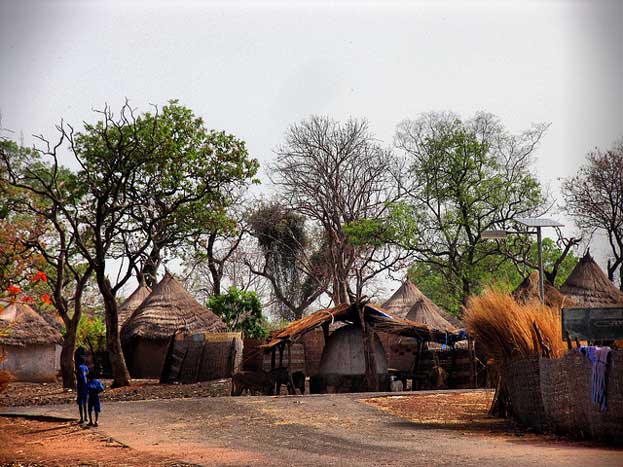
Niokolo Koba National Park Senegal

This is for side heading

Fortifications on the Caribbean Side of Panama is a magnificent examples of 17th- and 18th-century military architecture, these Panamanian forts on the Caribbean coast form part of the defense system built by the Spanish Crown to protect transatlantic trade. The group of 17th- and 18th-century fortifications, the historic sites of Reportorial and San Lorenzo, are outstanding examples of Spanish colonial military architecture of this period.

Slideshow Heading

Text Showing

Fortifications on the Caribbean Side of Panama is a magnificent examples of 17th- and 18th-century military architecture, these Panamanian forts on the Caribbean coast form part of the defense system built by the Spanish Crown to protect transatlantic trade. The group of 17th- and 18th-century fortifications, the historic sites of Reportorial and San Lorenzo, are outstanding examples of Spanish colonial military architecture of this period.
You have to believe in yourself, that is the secret. Even when I was in an orphanage, when I was roaming the street, Trying to find enough to eat, even then I thought of myself as the greatest actor in the world. I had to feel, the exuberance that comes from utter confidence in myself. Without it, you go down to defeat.
Golden Words of the Article
You have to believe in yourself, that is the secret. Even when I was in an orphanage, when I was roaming the street, Trying to find enough to eat, even then I thought of myself as the greatest actor in the world. I had to feel, the exuberance that comes from utter confidence in myself. Without it, you go down to defeat.
Charlie Chaplin
You have read this article Azerbaijan / Brunei / Castles / Churches with the title Azerbaijan. You can bookmark this page URL https://tiffanyeatworld.blogspot.com/2012/09/front-page-7.html. Thanks!
New Post for Blog

The Great Wall of ChinaThe Great Wall of China is a series of stone and earthen fortifications in northern China, built originally to protect the northern borders of the Chinese Empire against intrusions by various nomadic groups. Several walls havebeen built since the 5th century BC that are referred to collectively as the Great Wall, which has been rebuilt and maintained from the 5th century BC through the 16th century. One of the most famous is the wall built between 220–206 BC by the first Emperor of China, Qin Shi Huang. Little of that wall remains; the majority of the existing wall was built during the Ming Dynasty.

Why China is always developing country.

The Great Wall of China is a series of stone and earthen fortifications in northern China, built originally to protect the northern borders of the Chinese Empire against intrusions by various nomadic groups. Several walls havebeen built since the 5th century BC that are referred to collectively as the Great Wall, which has been rebuilt and maintained from the 5th century BC through the 16th century. One of the most famous is the wall built between 220–206 BC by the first Emperor of China, Qin Shi Huang. Little of that wall remains; the majority of the existing wall was built during the Ming Dynasty.
The Great Wall stretches from Shanhaiguan in the east
The Great Wall stretches from Shanhaiguan in the east, to Lop Nur in the west, along an arc that roughly delineates the southern edge of Inner Mongolia. The most comprehensive archaeological survey, using advanced technologies, has concluded that the entire Great Wall, with all of its branches, stretches for 8,851.8 km (5,500.3 mi).
image
The Great Wall of China

The Great wall of china built by the first Emperor of China, Qin Shi Huang

The Great Wall of China is a series of stone and earthen fortifications in northern China, built originally to protect the northern borders of the Chinese Empire against intrusions by various nomadic groups. Several walls havebeen built since the 5th century BC that are referred to collectively as the Great Wall, which has been rebuilt and maintained from the 5th century BC through the 16th century. One of the most famous is the wall built between 220–206 BC by the first Emperor of China, Qin Shi Huang. Little of that wall remains; the majority of the existing wall was built during the Ming Dynasty. The Great Wall stretches from Shanhaiguan in the east, to Lop Nur in the west, along an arc that roughly delineates the southern edge of Inner Mongolia. The most comprehensive archaeological survey, using advanced technologies, has concluded that the entire Great Wall, with all of its branches, stretches for 8,851.8 km (5,500.3 mi)
image
Singapore skyline, dusk
You have read this article Azerbaijan / Belgium / Brunei / Castles / Czech Republic with the title Azerbaijan. You can bookmark this page URL https://tiffanyeatworld.blogspot.com/2012/05/new-post-for-blog.html. Thanks!

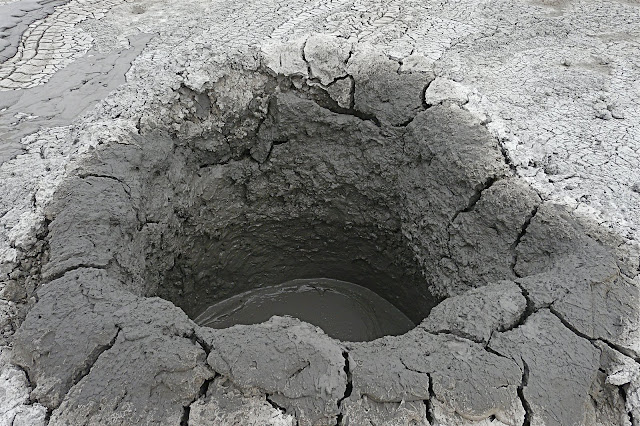
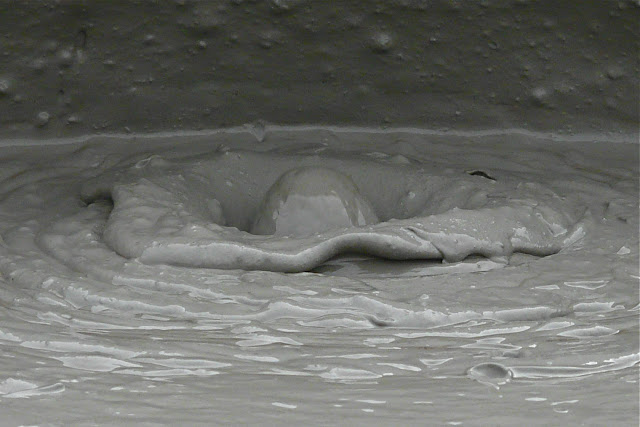
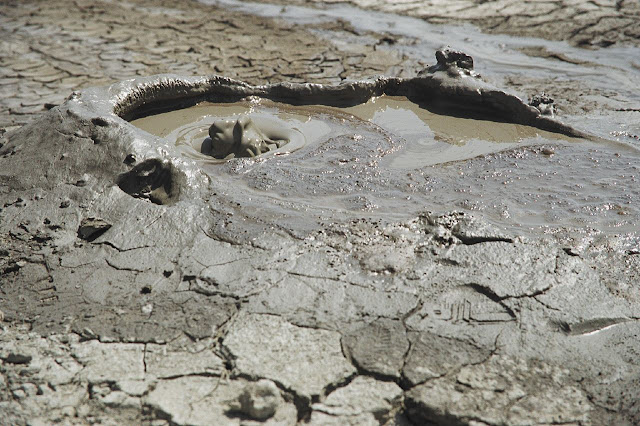
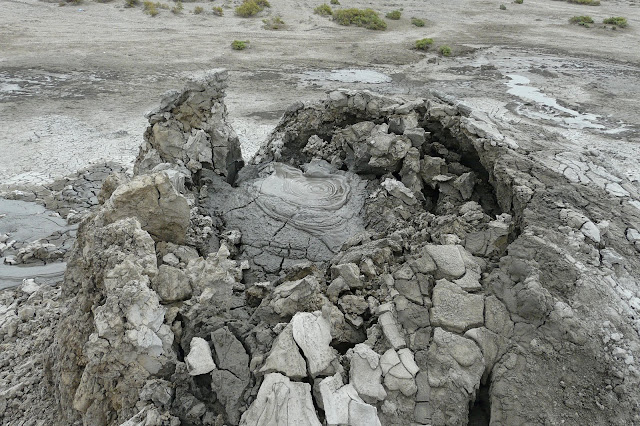
Mud Volcanoes Azerbaijan

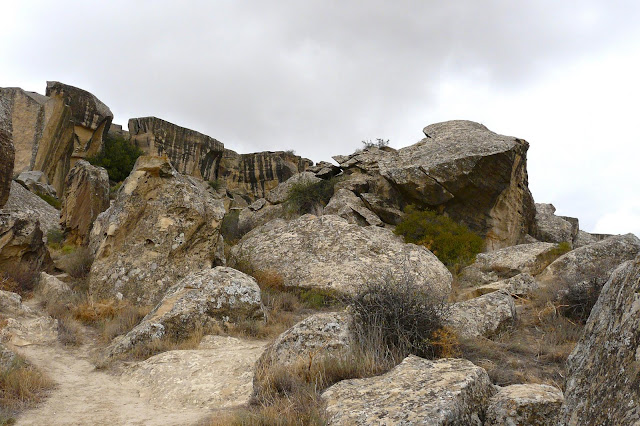
Gobustan Rock Art Cultural Landscape or simply Gobustan is a hill and mountain site occupying the southeast ending of the Big Caucasian Ridge, mainly in the basin of Jeyrankechmaz River, between the rivers Pirsagat and Sumgait. It is located west of the settlement of Gobustan, about 40 miles (64 km) southwest of the centre of Baku on the west bank of the Caspian Sea.

image
Mud Volcanoes Azerbaijan

The territory of Gobustan is cut up with numerous, sometimes rather deep ravines (in Azerbaijani: gobu). That is a suggested origin of the Gobustan geographical name. In 1966 Gobustan was declared a national historical landmark of Azerbaijan in an attempt to preserve the ancient carvings, relics, mud volcanoes and gas-stones in the region. The mountains Boyukdash, Kichikdash, Jingirdag, and the Yazili hill were taken under legal government protection. These mountains are located near the Caspian Sea, in southeast part of Gobustan.

In 2007 Gobustan was declared a UNESCO World Heritage Site considered to be of "outstanding universal value" for the quality and density of its rock art engravings, for the substantial evidence the collection of rock art images presents for hunting, fauna, flora and lifestyles in pre-historic times and for the cultural continuity between prehistoric and medieval times that the site reflects.

Azerbaijan and its Caspian coastline are home to nearly 400 mud volcanoes, more than half the total throughout the world. In 2001, one mud volcano 15 kilometers from Baku made world headlines when it suddenly started ejecting flames 15 meters high.

Many geologists as well as locals and international mud tourists trek to such places as the Firuz Crater, Gobustan, Salyan and end up happily covered in mud which is thought to have medicinal qualities.On the average, every twenty years or so, a mud volcano may explode with great force in Gobustan, shooting flames hundreds of metres into the sky, and depositing tonnes of mud on the surrounding area, The appearance of the Zoroastrian religion in Azerbaijan almost 2,000 years ago is closely connected with these geological phenomena, and Azerbaijan's etymology - Land of the Eternal Fire derives from its Zoroastrian history.

image

image

image

image

image

image

image

image

image

image

image

image

image

image

image

image

image

image

image

image

image

image

image

Text source:- Wikipedia. Images are copyrighted by their owners. Found any copyright issue, contact the administrator immediately. Report it now!
You have read this article Asia / Asia Heritage / Azerbaijan / Europe / Heritage / Heritage Europe / Heritage Natural with the title Azerbaijan. You can bookmark this page URL https://tiffanyeatworld.blogspot.com/2012/03/mud-volcanoes-azerbaijan.html. Thanks!

Gobustan Rock Art Cultural Landscape

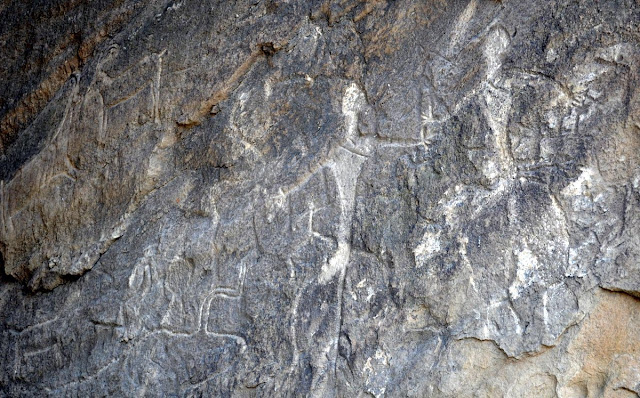
Gobustan Rock Art Cultural Landscape covers three areas of a plateau of rocky boulders rising out of the semi-desert of central Azerbaijan, with an outstanding collection of more than 6,000 rock engravings bearing testimony to 40,000 years of rock art. The site also features the remains of inhabited caves, settlements and burials, all reflecting an intensive human use by the inhabitants of the area during the wet period that followed the last Ice Age, from the Upper Paleolithic to the Middle Ages. The site, which covers an area of 537 ha, is part of the larger protected Gobustan Reservation.

image
Gobustan Rock Art Cultural Drawing

Gobustan has outstanding universal value for the quality and density of its rock art engravings, for the substantial evidence the collection of rock art images presents for hunting, fauna, flora and lifestyles in pre-historic times and for the cultural continuity between prehistoric and mediaeval times that the site reflects.

The rock engravings are an exceptional testimony to a way of life that has disappeared in the way they represent so graphically activities connected with hunting and fishing at a time when the climate and vegetation of the area were warmer and wetter than today.

The most remote and undisturbed landscapes are the Jinghirdag Moutain-Yazylytepe hill and Kichikdash Mountain. These areas need to be fully protected in order to ensure they keep their authenticity. The most visited site, Boyukdash, has more disturbances in the form of installations such as a prison and stone quarry, which should be managed as part of the Management Plan.

The knowledge of the site does not extend evenly across the whole rock art reservation. It would be desirable for a large-scale survey of the wider environment to be carried out to ensure the extent of protection needed to ensure the overall integrity of the rock art corpus.

The legal protective measures for the property are adequate. There is a need to complete the documentation, put in place active conservation measures and improve the technical competence of staff to carry out necessary urgent conservation work.

image

image

image

image

image

image

image

image

image

Text source:- Wikipedia. Images are copyrighted by their owners. Found any copyright issue, contact the administrator immediately. Report it now!
You have read this article Asia / Asia Heritage / Azerbaijan / Europe / Heritage Cultural / Heritage Europe with the title Azerbaijan. You can bookmark this page URL https://tiffanyeatworld.blogspot.com/2011/06/gobustan-rock-art-cultural-landscape.html. Thanks!