Showing posts with label Heritage Cultural. Show all posts

Wall Of China

The Great Wall of China is a series of stone and earthen fortifications in northern China, built originally to protect the northern borders of the Chinese Empire against intrusions by various nomadic groups. Several walls havebeen built since the 5th century BC that are referred to collectively as the Great Wall, which has been rebuilt and maintained from the 5th century BC through the 16th century.

image
The Great Wall of China

One of the most famous is the wall built between 220–206 BC by the first Emperor of China, Qin Shi Huang. Little of that wall remains; the majority of the existing wall was built during the Ming Dynasty.

The Great Wall stretches from Shanhaiguan in the east, to Lop Nur in the west, along an arc that roughly delineates the southern edge of Inner Mongolia. The most comprehensive archaeological survey, using advanced technologies, has concluded that the entire Great Wall, with all of its branches, stretches for 8,851.8 km (5,500.3 mi). This is made up of 6,259.6 km (3,889.5 mi) sections of actual wall, 359.7 km (223.5 mi) of trenches and 2,232.5 km (1,387.2 mi) of natural defensive barriers such as hills and rivers.

image

image

image

image

image

image

image

image

More Images Here

You have read this article Asia / Asia Heritage / China / Heritage / Heritage China / Heritage Cultural / Mountains / Wonders / Wonders of Medieval World / Wonders of the Eight World / Wonders of the New World with the title Heritage Cultural. You can bookmark this page URL https://tiffanyeatworld.blogspot.com/2012/03/wall-of-china.html. Thanks!

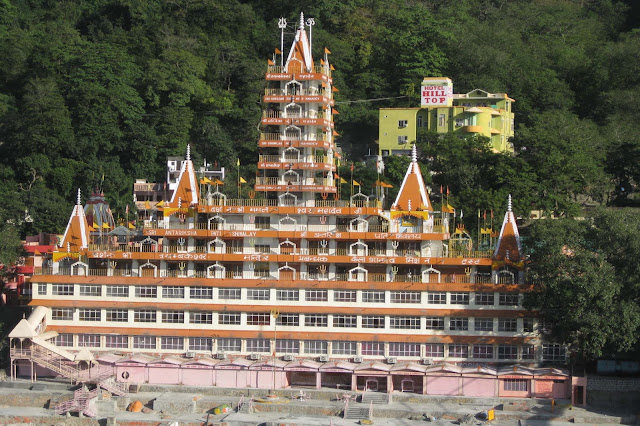
Rishikesh Pilgrimage

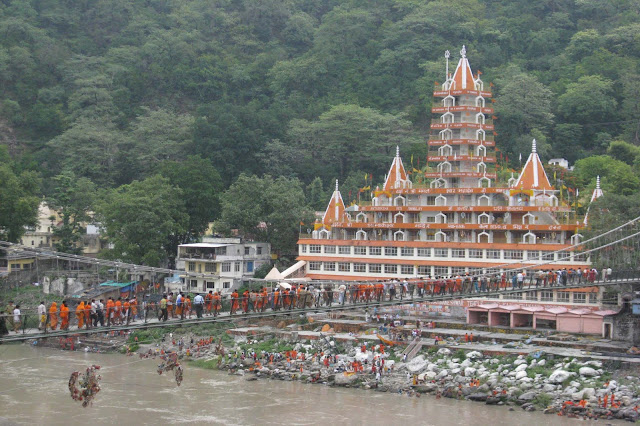
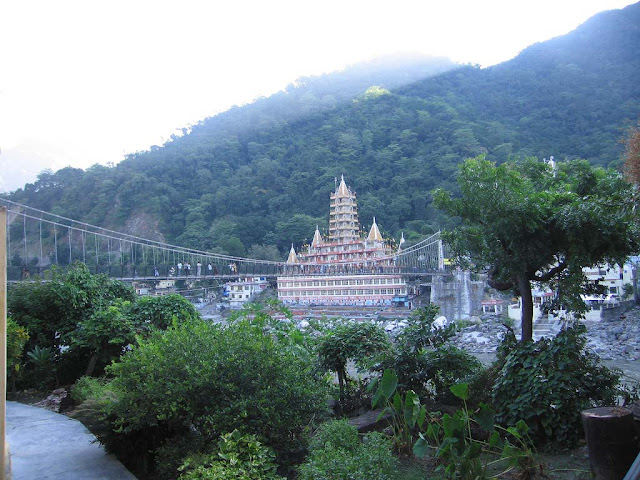
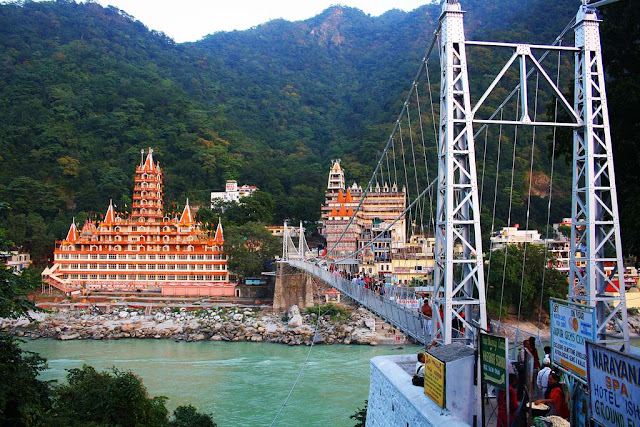
Rishikesh is a city and a municipal board in Dehradun district in the Indian state of Uttarakhand. It is surrounded by two other districts namely Tehri Garhwal and Pauri Garhwal. It is located in the foothills of the Himalaya in northern India and attracts thousands of pilgrims and tourists each year, from within India, as well as from other countries.

image
Rishikesh

Rishikesh is a vegetarian city by law, as well as an alcohol-free city. Rishikesh has also banned use of plastics bags by shopkeepers and vendors.It is also known as the gateway to the Himalayas and is located around 25 kilometres north of another holy city, Haridwar.

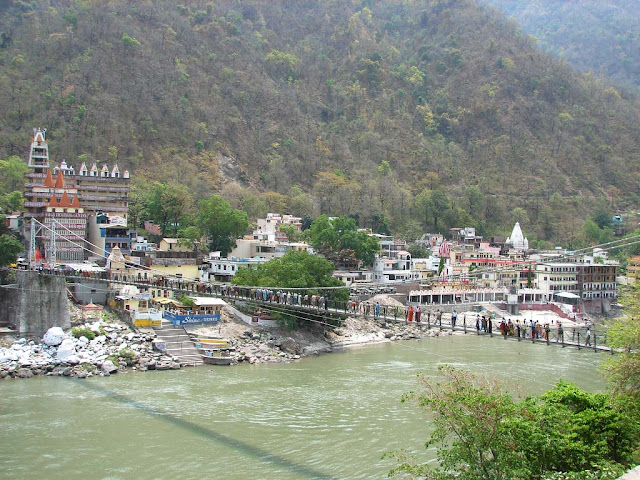
Rishikesh has been a part of the legendary state that Lord Rama did penance here for killing Ravana, the demon king of Lanka; and Lakshmana, his younger brother, crossed the river Ganges, at a point, where the present 'Lakshman Jhula' bridge stands today, using a jute rope bridge. The 'Kedar Khand' of Skanda Purana, also mentions the existence of Indrakund at this very point. The jute-rope bridge was replaced by iron-rope suspension bridge in 1889, and after it was washed away in the 1924 floods, it was replaced by a stronger present bridge.

The sacred river Ganges flows through Rishikesh. It is here that the river leaves the Shivalik Mountains in the Himalayas and flows out into the plains of northern India. Several temples, ancient as well as new, can be found along the banks of the Ganges in Rishikesh.

image

image

image

image

image

image

image

image

image

image

image

image

Text source:- Wikipedia. Images are copyrighted by their owners. Found any copyright issue, contact the administrator immediately. Report it now!
You have read this article Asia / Asia Heritage / Heritage Cultural / Heritage India / India / Temples with the title Heritage Cultural. You can bookmark this page URL https://tiffanyeatworld.blogspot.com/2012/03/rishikesh-pilgrimage.html. Thanks!

Estonian Song Festival

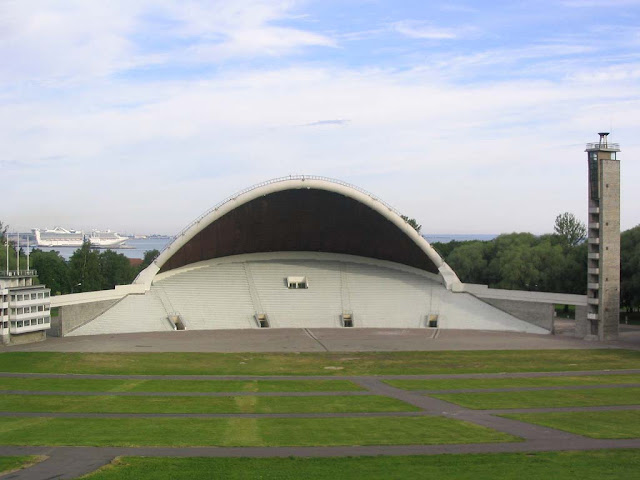
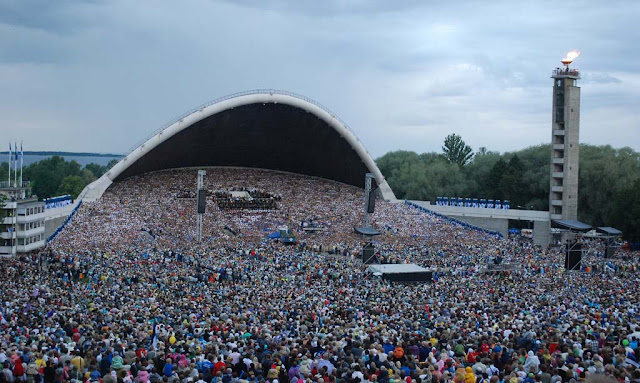
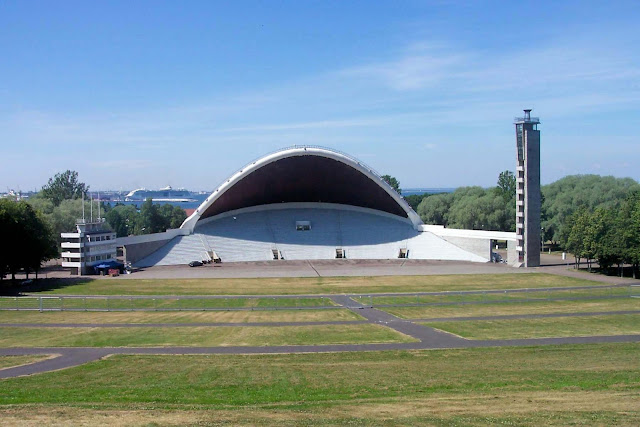
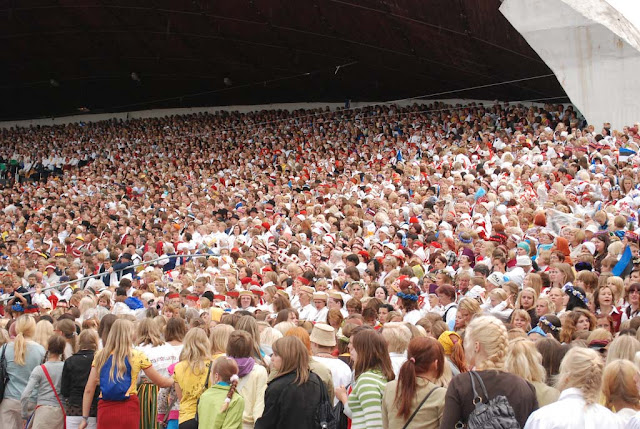
The Estonian Song Festival is one of the largest amateur choral events in the world, a Masterpiece of the Oral and Intangible Heritage of Humanity. It is held every five years in July on the Tallinn Song Festival Grounds. The joint choir has usually comprised 25,000 singers while in 2009, there were more than 30,000 participants performing to an audience of 80,000.

image
Estonian Song Festival

image

image

image

image

image

image

image

image

image

image

Text source:- Wikipedia. Images are copyrighted by their owners. Found any copyright issue, contact the administrator immediately. Report it now!
You have read this article Estonia / Europe / Heritage / Heritage Cultural / Heritage Europe with the title Heritage Cultural. You can bookmark this page URL https://tiffanyeatworld.blogspot.com/2012/03/estonian-song-festival.html. Thanks!

Rock Sites of Cappadocia

In a spectacular landscape, entirely sculpted by erosion, the Göreme valley and its surroundings contain rock-hewn sanctuaries that provide unique evidence of Byzantine art in the post-Iconoclastic period. Dwellings, troglodyte villages and underground towns – the remains of a traditional human habitat dating back to the 4th century – can also be seen there.

image
Göreme National Park and the Rock Sites of Cappadocia


The rupestral sanctuaries of Cappadocia constitute an unique artistic achievement in a region of superlative natural features, providing irreplaceable testimony to post-iconoclast Byzantium. The dwellings, village convents and churches retain the fossilized images of a province of the Byzantine Empire between the 4th century and the Turkish invasion.

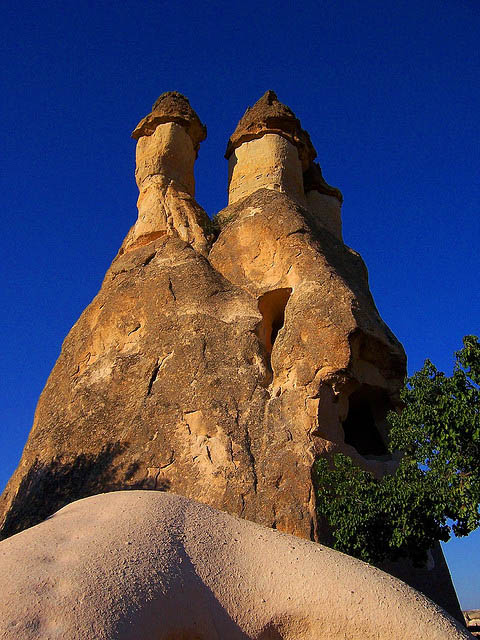
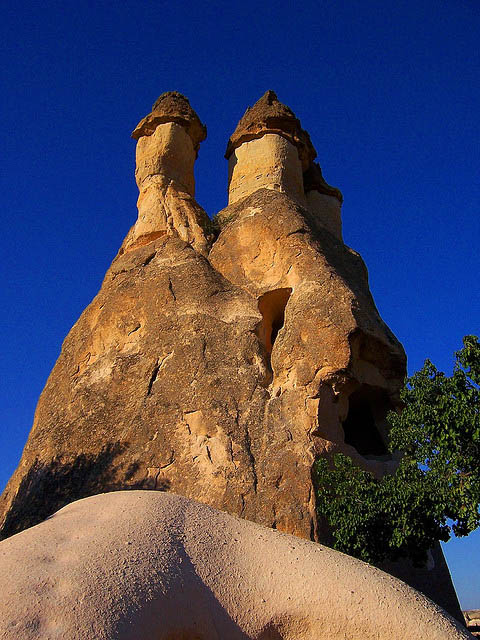
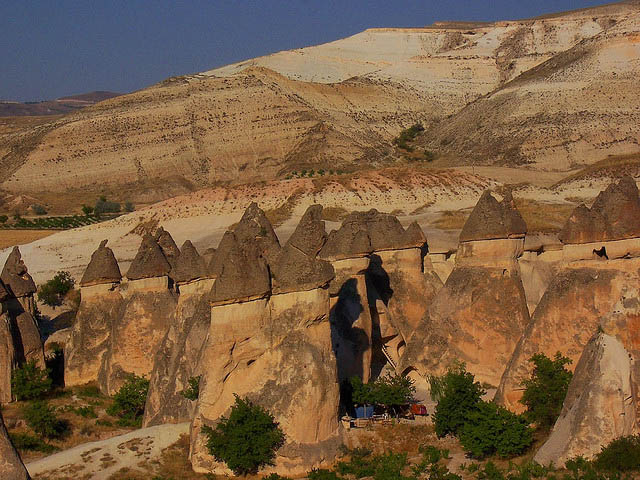
The eroded plateau of the Göreme valley is a spectacular example of the effects of differential erosion of the volcanic tuff sediments by wind and water. Typical features are pillars, columns, towers, obelisks and needles that reach heights of 40 m. The major remnant of erosion, Akdağ (1,325 m), is the dominant feature in the valley. The nearby Erciyas volcano is still active with occasional minor eruptions. Its outstanding example represents the Earth's evolutionary history. Within these rock formations people have excavated a network of caves which served as refuges, residences, storage and places of worship dating from the 4th century. The surrounding landscape is agricultural with a number of small scattered rural villages.

The historical setting, the rock-hewn churches and the unusual eroded landforms combine to produce a mixed cultural/natural landscape of unusual appearance. Architectural styles are based on the local stone and the valley has changed little over the centuries.

image

Although the area has been extensively used and modified by man for centuries the resulting landscape is one of harmony and consideration of the intrinsic values of the natural landforms. There has been some earthquake damage to some of the cones and pillars but this is seen as a naturally occurring phenomenon. In the ruin like landscape of the Cappadocia plateau where natural erosion has sculpted the tuff into shapes which are eerily reminiscent of towers, spires, domes and pyramids, man has added to the workmanship of the elements by digging cells, churches and veritable subterranean cities which together make up one of the world's largest cave dwelling complexes. Although interesting from a geological and ethnological point of view, this phenomenal rupestral site excels especially for the incomparable beauty of the decor of the Christian sanctuaries whose features make Cappadocia one of the leading examples of post-iconoclast Byzantine art.
image

It is believed that the first signs of monastic activity in Cappadocia date back to the 4th century at which time, acting on the instructions of Basil the Great, Bishop of Caesarea (Kayseri), small anchoritic communities began inhabiting cells dug into the rock. Later on, in order to resist Arab forays they began banding together into troglodyte villages or subterranean towns such as Kaymaklı or Derinkuyu which served as places of refuge.
image

Cappadocian monasticism was already well established in the iconoclast period (725-842), as illustrated by the many sanctuaries, the decoration of which was held to the strict minimum of symbols (most often sculpted or tempera painted crosses). After 842, however, many rupestral churches were dug in Cappadocia. These churches were richly decorated with brightly coloured figurative painting. Among them were those in the Göreme valley: Tokalı Kilise, El Nazar Kilise (10th century), Barbara Kilise, Saklı Kilise (11th century), Elmalı Kilise and Karanlık Kilise (end of the 12th to beginning of the 13th centuries), etc.

image

image

image

image

Text source:- Wikipedia. Images are copyrighted by their owners. Found any copyright issue, contact the administrator immediately. Report it now!
You have read this article Asia / Asia Heritage / Heritage / Heritage Cultural / Houses / Turkey / Turkey Heritage with the title Heritage Cultural. You can bookmark this page URL https://tiffanyeatworld.blogspot.com/2012/03/rock-sites-of-cappadocia.html. Thanks!

Mahabalipuram India

This group of sanctuaries, founded by the Pallava kings, was carved out of rock along the Coromandel coast in the 7th and 8th centuries. It is known especially for its rathas (temples in the form of chariots), mandapas (cave sanctuaries), giant open-air reliefs such as the famous 'Descent of the Ganges', and the temple of Rivage, with thousands of sculptures to the glory of Shiva.

image
Mahabalipuram India

Mahabalipuram is pre-eminently testimony to the Pallavas civilization of south-east India.The sanctuary, known especially for its rathas (temples in the form of chariots), mandapas (cave sanctuaries), and giant open-air reliefs, is one of the major centres of the cult of Siva. The influence of the sculptures of Mahabalipuram, characterized by the softness and supple mass of their modelling, spread widely (Cambodia, Annam, Java).

image

Founded in the 7th century by the Pallavas sovereigns south of Madras, the harbour of Mahabalipuram traded with the distant kingdoms of South-East Asia: Kambuja (Cambodia) and Shrivijaya (Malaysia, Sumatra, Java) and with the empire of Champa (Annam). But the fame of its role as a harbour has been transferred to its rock sanctuaries and Brahmin temples which were constructed or decorated at Mahabalipuram between 630 and 728.

image

Most of the monuments, like the rock-cut rathas, sculptured scenes on open rocks like Arjuna's penance, the caves of Govardhanadhari and Ahishasuramardini, and the Jala-Sayana Perumal temple (the sleeping Mahavishnu or Chakrin at the rear part of the Shore temple complex) are attributed to the period of Narasimhavarman I Mamalla.

image

The monuments may be subdivided into five categories:
  • ratha temples in the form of processional chariots, monolithic constructions cut into the residual blocks of diorite which emerge from the sand. The five ratha of the south, which are the most famous, date to the reign of Naharasimhavarman Mamalla (630-68), the great Pallavas king (the Cholas texts, moreover, call the city Mamallapuram).
  • mandapa, or rock sanctuaries modelled as rooms covered with bas-reliefs (the mandapa of Varaha, representing the acts of this avatar of Vishnu; the mandapa of the Five Pandavas and, especially, the mandapa of Krishna and the mandapa of Mahishasuramardini).
  • rock reliefs in the open air illustrate a popular episode in the iconography of Siva, that of the Descent of the Ganges. The wise King Baghirata having begged him to do so, Siva ordered the Ganges to descend to Earth and to nourish the world. The sculptors used the natural fissure dividing the cliff to suggest this cosmic event to which a swarming crowd of gods, goddesses, mythical beings (Kinnara, Gandherya, Apsara, Gana, Naga and Nagini), wild and domestic animals bear witness.
  • temples built from cut stone, like the Temple of Rivage, which was constructed under King Rajasimha Narasimavarmn II (695-722), with its high-stepped pyramidal tower and thousands of sculptures dedicated to the glory of Siva.
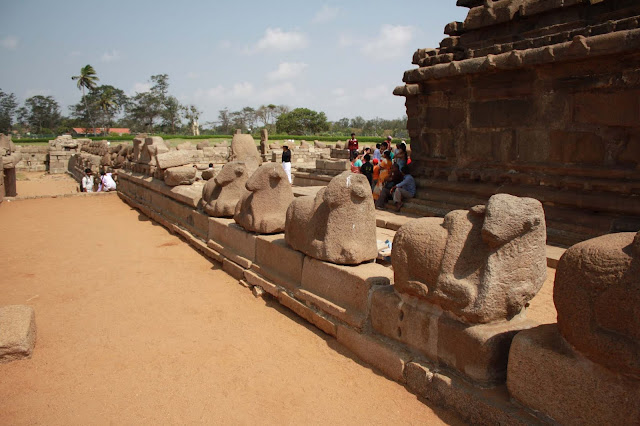
  • monolithic rathas, from single- to triple-storeyed, display a variety of architectural forms, while the Dharmaraja, Arjuna and Draupadi rathas are square in plan, the Bhima and Ganesa rathas rectangular, and the Sahadeva ratha apsidal. Structural architecture was introduced on a grand scale by Pallava Rajasimha (700-28), culminating in the erection of the Shore Temple.


image

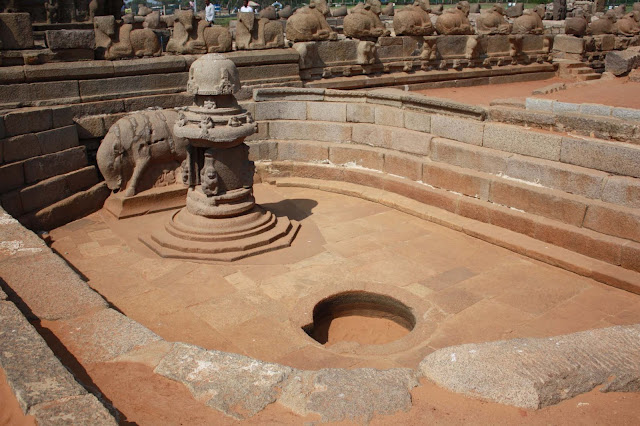
Another piece of architectural beauty is the Shore temple, standing against the background of the deep blue waters of the ocean. It belongs to a period when the constructional style of the Pallavas was at its peak in its decorative beauty and intrinsic quality. This building has become eroded by the corrosive action of seawater and air and the sculptures have become indistinct.

image

image

image

image

image

image

image

image

image

image

image

image

image

image

image

Text source:- Wikipedia. Images are copyrighted by their owners. Found any copyright issue, contact the administrator immediately. Report it now!
You have read this article Ancient Buildings / Asia / Asia Heritage / Heritage / Heritage Cultural / Heritage India / India / Monuments / Temples with the title Heritage Cultural. You can bookmark this page URL https://tiffanyeatworld.blogspot.com/2012/03/mahabalipuram-india.html. Thanks!