Showing posts with label Statues. Show all posts

Usuki Stone Buddhas

Usuki is a city located on the east coast of Ōita Prefecture, Japan. It is famous for its Usuki Stone Buddhas, a national treasure, and its soy sauce production. Recently it has become known for having the look and feel of a Japanese castle town. It is part of Ōita City's metropolitan area through economics and thus has strong ties to Ōita City. The city is bordered by Ōita City, Saiki, Tsukumi, and Bungo-ōno. The city looks upon the Bungo Channel in the east. The city surrounds the Bay of Usuki with the Saganoseki Peninsula in the north and the Nagame Peninsula in the south. Within the bay are Kuroshima Island and Tsukumi Island. Water from the bay flows into Usuki River, around whose flat lands town areas have been built. The northern part of the city has gently-sloping hills while the southern part has mountain ranges that are 500m to 600m above sea level.

image
Usuki Stone Buddhas


image

image

image

image

image

image

image

image

image

image

Text source:- Wikipedia. Images are copyrighted by their owners. Found any copyright issue, contact the administrator immediately. Report it now!
You have read this article Asia / Japan / Statues with the title Statues. You can bookmark this page URL https://tiffanyeatworld.blogspot.com/2012/02/usuki-stone-buddhas.html. Thanks!

Terracotta Army

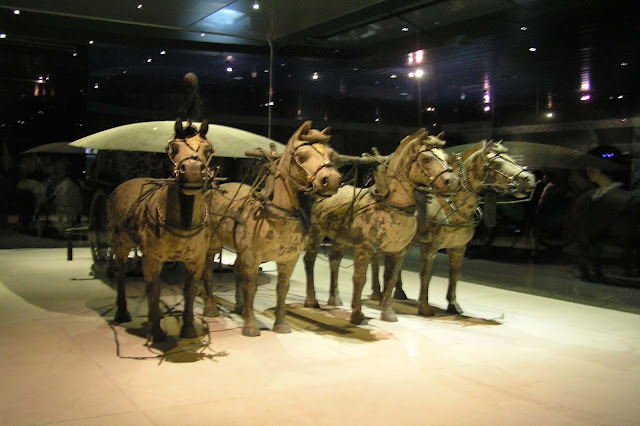
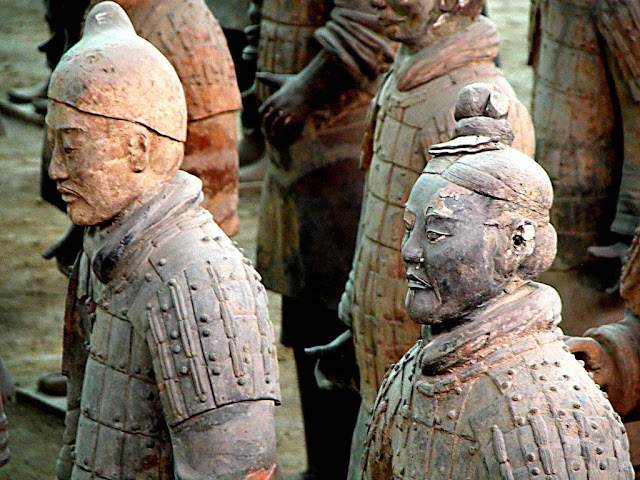
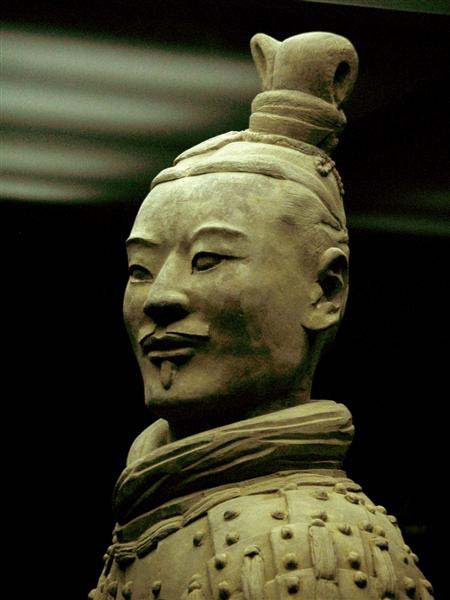
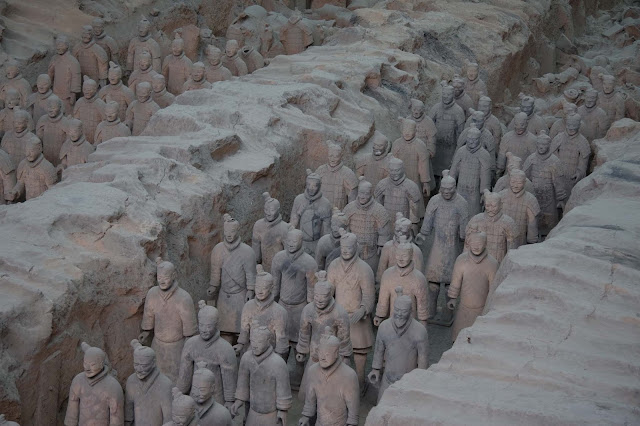
The Terracotta Army is a collection of terracotta sculptures depicting the armies of Qin Shi Huang, the first Emperor of China. The figures, dating from 3rd century BC, were discovered in 1974 by some local farmers in Lintong District, Xi'an, Shaanxi province, near the Mausoleum of the First Qin Emperor.

image
Terracotta Army

The figures vary in height, according to their roles, with the tallest being the generals. The figures include warriors, chariots, horses, officials, acrobats, strongmen and musicians. Current estimates are that in the three pits containing the Terracotta Army there were over 8,000 soldiers, 130 chariots with 520 horses and 150 cavalry horses, the majority of which are still buried in the pits.

image

image

image

image

image

image

image

image

image

image

image

image

image

Text source:- Wikipedia. Images are copyrighted by their owners. Found any copyright issue, contact the administrator immediately. Report it now!
You have read this article Asia / Asia Heritage / China / Heritage / Heritage China / Heritage Cultural / Statues / Wonders / Wonders of the Eight World with the title Statues. You can bookmark this page URL https://tiffanyeatworld.blogspot.com/2011/06/terracotta-army.html. Thanks!

Christ Redeemer

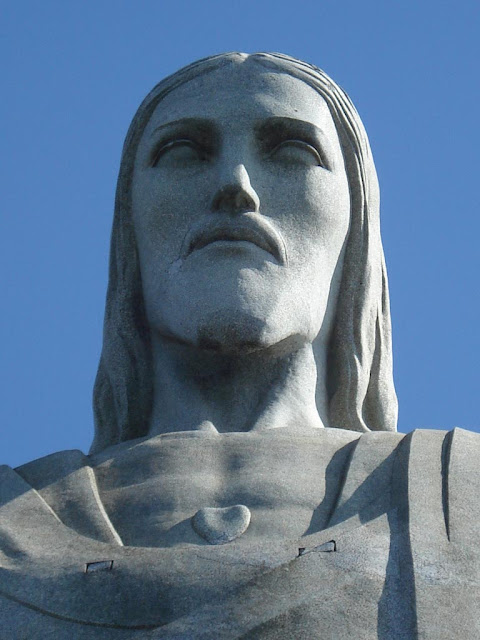
Christ the Redeemer is a statue of Jesus Christ in Rio de Janeiro, Brazil; considered the second largest Art Deco statue in the world.It is 39.6 metres (130 ft) tall, including its 9.5 metres (31 ft) pedestal, and 30 metres (98 ft) wide. It weighs 635 tonnes (625 long, 700 short tons).

image
Christ The Redeemer

The redeemer statue is located at the peak of the 700-metre (2,300 ft) Corcovado Mountain in the Tijuca Forest National Park overlooking the city. A symbol of Christianity, the statue has become an icon of Rio and Brazil. It is made of reinforced concrete and soapstone, and was constructed between 1922 and 1931.

On July 7, 2007, in Lisbon, Christ the Redeemer was named one of the New Seven Wonders of the World in a list compiled by the Swiss-based The New Open World Corporation. Leading corporate sponsors, including Banco Bradesco and Rede Globo, had lobbied to have the statue voted into the top seven.

image

image

image

image

image

image

image

image

image

Text source:- Wikipedia. Images are copyrighted by their owners. Found any copyright issue, contact the administrator immediately. Report it now!
You have read this article Brazil / South America / Statues / Wonders / Wonders of the New World with the title Statues. You can bookmark this page URL https://tiffanyeatworld.blogspot.com/2011/06/christ-redeemer.html. Thanks!